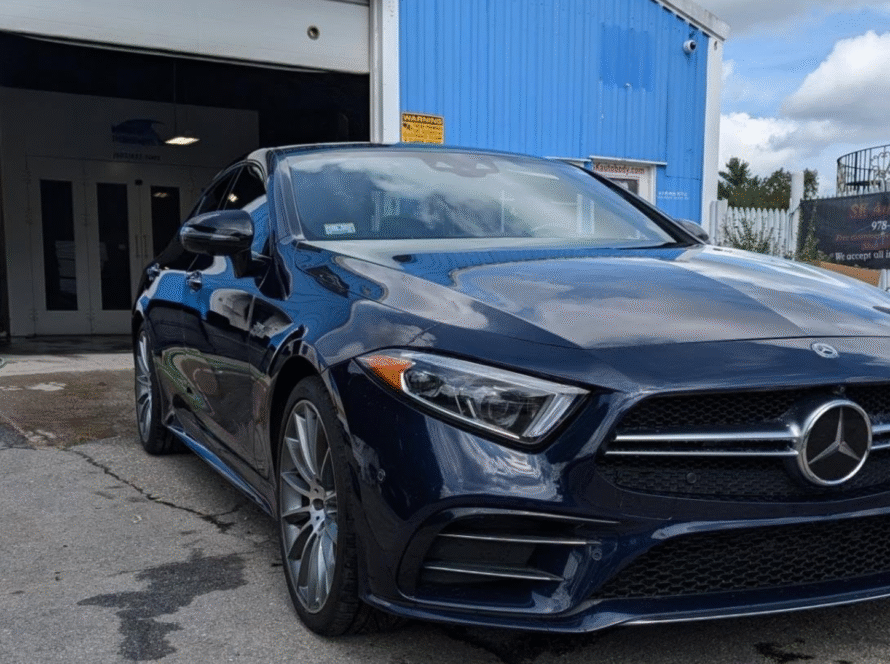
Most drivers notice something is off with their vehicle long before they act on it. A dent that “isn’t that bad,” a bumper that’s slightly out of alignment, or a panel that took a hit in a parking lot — these things get pushed to the back of the mind. But ignoring the signs that your vehicle needs auto part replacement in Georgetown, MA can turn a manageable repair into a costly safety problem. Your car’s body panels, bumpers, and structural components do more than just make your vehicle look good. They absorb impact, protect critical systems, and keep you and your passengers safe.
At SK Auto Body, we work with drivers across Georgetown, MA every day, and we know that catching these warning signs early saves both time and money. This guide walks you through exactly what to look for.
5 Warning Signs Your Car Needs a Part Replacement
1. Visible Structural Damage After a Collision
If your vehicle has been in a collision — even a minor one — structural damage may not always be visible to the naked eye. Bent frames, misaligned panels, and cracked bumper supports often hide behind an outwardly normal appearance. If you notice uneven panel gaps, doors that don’t close smoothly, or a hood that sits slightly higher on one side, these are clear indicators the underlying structure has been compromised.
Structural integrity is not cosmetic. A damaged frame affects how your vehicle handles a future crash, directly impacting the safety of everyone in the car. SK Auto Body uses advanced frame measurement technology to assess structural damage and restore your vehicle to OEM (Original Equipment Manufacturer) safety standards.
2. Rust or Corrosion on Body Panels
New England winters are hard on vehicles. Road salt, moisture, and freeze-thaw cycles accelerate rust formation — especially on exposed panels, wheel arches, and undercarriage components. What starts as a surface blemish can quickly eat through a panel entirely if left alone.
When rust has penetrated beyond the surface coating and into the metal, a panel replacement is typically the correct solution — not a patch. Trying to car paint over active rust without treating the underlying metal will only delay a larger repair bill. If you notice bubbling paint, orange discoloration along panel seams, or soft spots on any body surface, have it assessed immediately.
3. Bumper Damage That Looks Purely Cosmetic
Modern bumpers are engineered systems, not just decorative covers. They house sensors for parking assist and collision avoidance, absorb low-speed impact energy, and protect radiators, headlights, and cooling components behind them. A cracked or deformed bumper — even one that appears minor — may have compromised the structural foam and impact absorbers underneath.
If your bumper is cracked, sagging, or pulling away from the vehicle’s body, a bumper replacement is almost always the right call. Attempting to glue or tape a damaged bumper back into place risks failure of the ADAS sensors embedded in it, which can affect braking and lane-keeping systems.
4. Headlights, Taillights, or Lenses That Are Cracked or Fogged
Cracked light housings are a direct safety concern and, in Massachusetts, a reason for a failed inspection. Water ingress into a cracked headlight assembly causes rapid corrosion of the electrical contacts and reduces light output significantly. If your headlight lens is yellowed, cracked, or has moisture condensation inside, replacement is safer and more cost-effective than attempting a restoration that won’t hold long-term.
Beyond the light housing itself, check whether the mounting brackets and surrounding body panels are intact. Collision damage frequently misaligns headlight assemblies without breaking the lens — this misalignment reduces road visibility at night and points your lights at oncoming traffic.
5. Doors or Panels That Don’t Align Properly
A door that requires extra force to close, a hood that doesn’t sit flush, or a trunk that won’t latch securely — these are all signs that something in the body structure is out of alignment. Sometimes this is caused by a prior collision that was never fully repaired. In other cases, it can be a gradual result of accumulated minor impacts or component fatigue.
Misaligned panels also compromise your vehicle’s weatherproofing, allowing water and noise into the cabin. More critically, a door that doesn’t latch correctly is a serious safety hazard in any accident.
OEM Parts vs. Aftermarket Parts: What You Should Know
When replacing auto body components, the parts used matter. OEM (Original Equipment Manufacturer) parts are made to the exact specifications of your vehicle’s manufacturer — they fit precisely and perform as designed. Certified aftermarket parts can also be a quality option when they meet manufacturer-equivalent standards.
According to the National Highway Traffic Safety Administration (NHTSA), federal safety standards apply to both OEM and aftermarket replacement parts, and manufacturers are responsible for recalling parts found to have safety-related defects. This means you should always verify that any replacement part used on your vehicle meets safety compliance requirements — and that it’s installed by a certified technician.
SK Auto Body uses top-quality OEM and certified aftermarket parts on every repair, guaranteeing a perfect fit and factory-level performance.
What the Part Replacement Process Looks Like at SK Auto Body
Understanding the process helps reduce anxiety about what can feel like a complicated repair. Here is how SK Auto Body handle from start to finish:
Free Estimate First: You can submit photos of your vehicle online and receive a detailed estimate within 48 hours from a licensed appraiser. There are no surprises or hidden fees.
Full Damage Assessment: Before any parts are ordered, the vehicle is carefully disassembled to identify all damage — both visible and structural. Insurance auto companies are involved from the beginning to ensure smooth claim processing.
Certified Installation: SK Auto Body is the only I-CAR Gold Certified auto body shop in Methuen and Haverhill — a designation held by fewer than 20% of body shops nationwide. This means every technician meets the industry’s highest training standards for part replacement and collision repair.
Paint Matching and Quality Check: Once parts are installed, the vehicle receives a precision paint match backed by a five-year warranty, followed by a comprehensive quality inspection before delivery.
Does Your Insurance Cover Part Replacement?
In most collision repair situations, your auto insurance policy covers part replacement costs — minus your deductible. Massachusetts law requires insurance companies to clearly specify whether OEM or aftermarket parts will be used in your repair. If you have any questions about your coverage, the team at SK Auto Body works directly with all major insurance providers and handles the claims process on your behalf.
Get Expert Part Replacement Near Georgetown, MA
Knowing the warning signs is the first step. Acting on them promptly is what keeps your vehicle safe and preserves its long-term value. If you’ve noticed any of the signs covered in this guide, don’t wait for the damage to get worse. SK Auto Body — serving Georgetown, MA and all of Northern Massachusetts from 348 Howe St, Methuen, MA — offers free estimates, certified repairs, and a five-year paint warranty. Request your free estimate today at SK Auto Body and get back on the road with confidence.
Frequently Asked Questions
How do I know if a part needs to be replaced versus repaired?
The general rule is that if a component has lost its structural integrity, is cracked rather than dented, or has embedded safety technology (like a bumper with sensors), replacement is the right option. A certified technician can assess this during a free estimate.
Will replaced parts affect my vehicle’s resale value?
Parts replaced with OEM or certified aftermarket components, installed correctly and with a proper paint match, do not typically reduce resale value. In fact, unrepaired damage or poorly done repairs lower resale value far more than a professional replacement.
How long does a typical part replacement take?
Timelines vary based on part availability and the extent of damage, but SK Auto Body is known for fast turnaround times and keeps customers updated by phone, email, or text throughout the process.
Is it safe to drive with a damaged bumper or cracked panel?
Driving with a damaged bumper or compromised structural panel carries real risk. Modern bumpers house parking sensors and impact absorbers that protect critical vehicle systems. A damaged panel may also expose the vehicle’s frame to moisture and rust. Get it assessed as soon as possible.